
A photographer's digital products. Why don't they sell themselves?
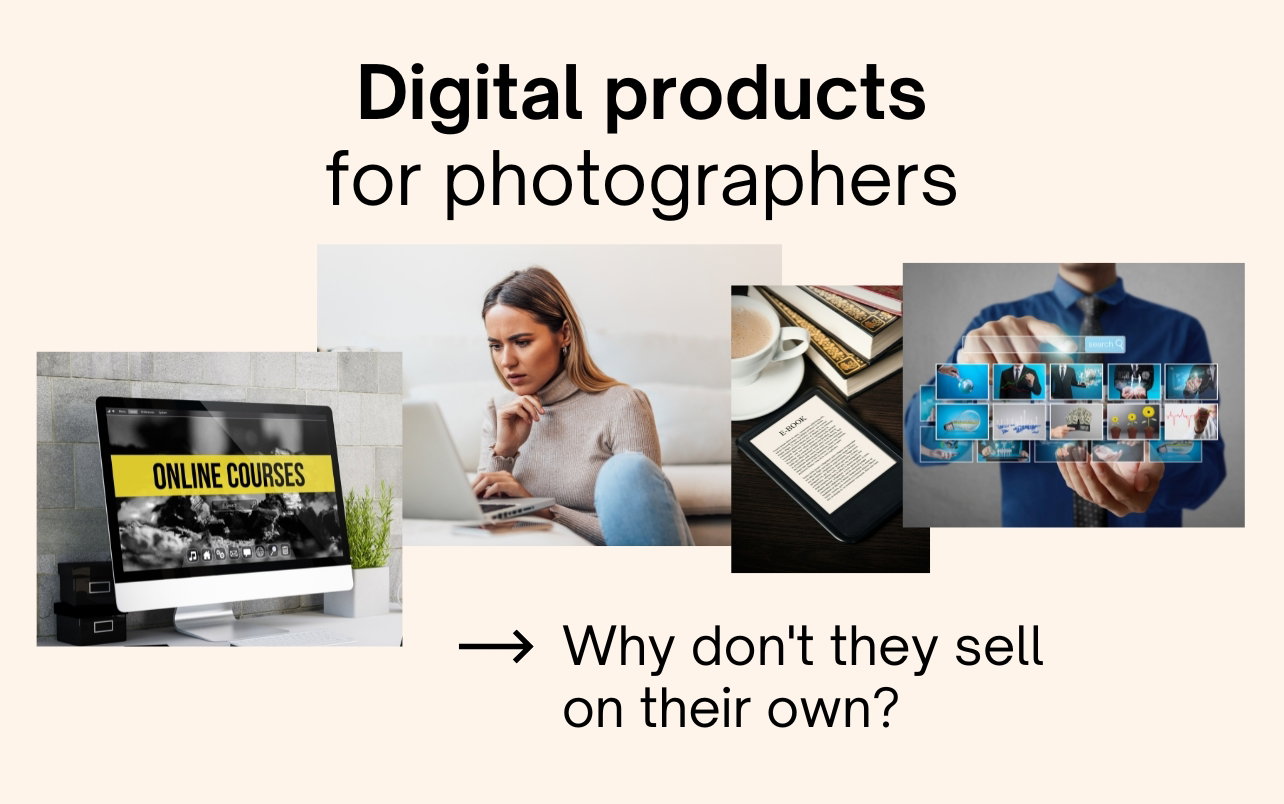
For several years, digital products have been presented as one of the easiest ways to increase a photographer's income. Presets, e-books, online courses, or educational materials are supposed to almost sell themselves, providing extra income without the need to do more photo shoots.
It is no surprise that more and more photographers are thinking about starting their own online store. It is a tempting perspective – after all, a product prepared once can reach new customers for many months, or even years.
The problem is that reality looks a bit different.
Just publishing a product in a store doesn't make it suddenly start generating sales. Behind most successful launches are months of building a community, regular communication, testing ideas, and consistent marketing. This is usually not visible on screenshots showing new orders or impressive sales results.
Does this mean it's not worth creating digital products? On the contrary. They can be a great addition to your photography business and help you diversify your income sources. However, you should approach them with the right expectations and understand well what really influences their sales.
In this article, we will show you why digital products don't sell themselves, what elements decide the success of an online store, and where to start if you are thinking about creating your own offer.
We will also share the story of a photographer who, at his peak, was able to sell over 100 digital products in a single day. His experiences perfectly show that behind every such result is much more than just a good product.
The myth we hear most often: "A good product will sell itself"
If you have ever been interested in selling digital products, you have probably come across similar slogans:
"Create your own preset and start earning".
"Record a course once and sell it for years".
"Passive income is right at your fingertips".
It sounds tempting. And indeed – digital products have huge potential. Unlike photo shoots, they do not require your presence at every sale. A customer can buy a preset at any time of day or night, automatically pay for the order, download the files, and receive an invoice.
However, this doesn't mean the sale happens by itself.
Many people confuse the automation of the sales process with getting customers automatically. These are two completely different things.
You can automate payments, sending files, or issuing invoices. However, you cannot automate customer trust, interest in a new product, or buying decisions.
That's why just publishing a preset, e-book, or course in an online store rarely brings the expected results. Even the best product won't sell if nobody hears about it.
Behind most successful launches are actions that the audience often doesn't see: regular communication on social media, building a community, collecting reviews, creating valuable content, or consistently reminding people about your offer.
These are the elements that make digital products start working for your business. Not because they are "passive", but because they were built on solid foundations.
What really sells digital products?
The success of digital products is rarely a coincidence. Yes, product quality matters, but it's usually not the factor that decides the number of orders. Relationships, trust, and how you communicate your offer have a much bigger impact.
1. Trust in you
When buying a preset or an e-book, a customer cannot try it on or test it first. They make a decision based on what they know about you and your work.
If you have been showing the behind-the-scenes of your business for months, sharing knowledge, publishing valuable content, and being present in your community, the purchase becomes a natural next step. Trust is not built on the day of the product launch, but much earlier.
2. Solving a specific problem
The products that sell best are those that answer a real need of the audience.
Before you start creating your own product, you should ask yourself a few questions:
What do customers or other photographers ask you about most often?
Which tasks take them the most time?
What can you make easier or faster for them?
The more specific the problem you solve, the easier it will be to convince people to buy.
3. Regular communication
One of the most common mistakes is treating a product launch as a one-time event.
Publishing one post or story is usually not enough. Most people won't see your message the first time, and some won't be ready to buy yet.
That's why you should regularly remind people about your offer, show the results of using the product, answer customers' questions, and share reviews from people who have already used it.
4. Visibility
Even the best product won't sell if no one knows about it. Your own website, social media, newsletter, or collaborations with other creators are channels that help you reach new audiences and stay in touch with current customers. The larger and more engaged the community, the easier it is to grow sales of future products.
Case study: over 100 sales in one day. What was behind this result?
A good example is the story of photographer and digital product creator Jakub Barański (Kubełkowaty), whom we had the chance to talk to in the #RozwójFotografa with Mafelo series.
During the pandemic, Jakub almost completely focused on developing his online store. He regularly created new products, published more presets, and consistently built interest around them. There were days when a product published in the morning reached over 100 sales by the same evening.
At first glance, you might get the impression that this was a perfect example of passive income. However, Jakub himself looks at it completely differently.
As he highlights, behind every such result were months of work on building a community, testing different forms of promotion, and regularly reminding the audience about his offer. The product launch was just the finale of a process that started much earlier.
Interestingly, when after some time he focused on other areas of his business and reduced the store's promotion, sales also started to drop. Not because the products were no longer valuable. They simply stopped being regularly shown to the audience.
This shows a very important connection.
A digital product can sell automatically, but it will not get customers automatically. Behind every order is earlier work related to marketing, building trust, and reaching the right people.
Do you want to know the whole story? In the interview with Jakub Barański, we talk not only about record sales results, but also about mistakes, lessons learned, and how he approaches creating digital products today.
Where to start selling digital products?
If you are thinking about creating your own digital product, don't start by choosing a sales platform or designing a website. This is a common mistake. Technology is important, but it doesn't decide whether a product will find its audience. It is much more important to answer a few basic questions.
Know the needs of your audience
The best digital products are not created by chance. They are an answer to a specific problem.
Think about it:
What do customers or other photographers ask you about most often?
Which activities take them the most time?
What knowledge or experience can you share?
It doesn't always have to be a complex online course. Sometimes a well-prepared preset, checklist, contract template, or a short guide solving one specific problem has much more value.
Start with one product
Don't try to build a large store with a dozen products right away. It is better to start with one polished solution and see how the audience reacts to it.
The first sale will give you much more knowledge than weeks spent on planning. You will find out what questions customers ask, what is worth improving, and which elements need polishing.
Don't wait for the perfect moment
Many photographers delay creating their first product because they think they don't have enough experience yet, or their community is too small.
Meanwhile, developing digital products is a process. Every new launch lets you get to know the audience's needs better, improve your offer, and gain valuable experience. Even if your first product doesn't achieve spectacular results, it will be a great lesson for the future.
Before you launch your own store... check these 3 things
Choosing a sales platform is often pushed to the background. Many creators focus mostly on the product itself, and only later think about how the sales process will look.
However, a few decisions made at the beginning can save you a lot of time and problems in the future.
1. Does the platform support selling digital products?
Not all online stores are created with digital products in mind. Check if the system automatically gives the customer access to the files after they pay for the order. Thanks to this, you won't have to manually send presets or e-books after every sale.
2. Does the platform integrate with payments?
The buying process should be simple and comfortable. The fewer steps a customer has to take, the bigger the chance they will complete the order. You should make sure that the platform works with popular payment operators and the whole process happens automatically.
3. Will the store connect to an invoicing program?
In the beginning, a few orders can be handled manually. But if sales start growing, issuing each invoice separately will quickly become annoying. Integration with an invoicing program lets you automate this process and focus on growing your offer instead of administration.
Automation? Yes. Automatic sales? Not necessarily.
A well-configured store can automate many processes: taking payments, sending products, or issuing invoices. This is a huge time saver and one of the reasons why digital products are such an attractive addition to a photography business.
However, you shouldn't expect that automation alone will bring sales. You still need to take care of customers. It is regular communication, building trust, and consistent marketing that make digital products really support the growth of your business.
Summary – is it worth selling digital products?
Definitely yes.
Digital products can become a valuable addition to your photography business. They let you share your knowledge, build your personal brand, and gradually create another source of income that is not directly linked to the number of photo shoots you do.
But you should remember that the product itself does not sell automatically. Success depends mostly on whether you can reach the right audience, build their trust, and regularly remind them about your offer.
You don't need to have a complex store or ten different products. It is often a much better solution to start with one well-polished product, listen to customers' opinions, and gradually expand your offer.
Digital products are not a shortcut. But they can become one of the most valuable elements of a well-planned photography business.
Do you want to know the story of a photographer who sold over 100 digital products a day?
In the article, we showed the most important conclusions and mechanisms behind selling digital products. If you want to see how it looked in practice, make sure to watch our conversation with Jakub Barański (Kubełkowaty) in the #RozwójFotografa with Mafelo series.
In the interview, he explains, among other things:
why he thinks that "passive income" is a myth,
what the behind-the-scenes of selling over 100 products in one day looked like,
where to start creating your own digital products,
what mistakes beginner creators make most often,
and how to build sales that are not based only on luck.

An expert in marketing, copywriting, and sales. She has years of experience writing for the photography industry. At Mafelo, she shares her marketing knowledge and turns the news and tips we want to give you into great articles.
You might also like

How to collect photo publication consents in kindergartens and schools? New Mafelo features


How to collect customer reviews? A guide for photographers

Pinterest for a photographer: an underestimated source of clients and website traffic